The eyes are among the most expressive features of the face, playing a central role in communication, appearance, and perceived age. Over time, however, the delicate tissues surrounding the eyes undergo natural changes.
Excess skin, fat protrusion, loss of elasticity, and weakening of supporting structures can lead to drooping upper eyelids, under-eye bags, and a tired or aged appearance.
Among the most effective solutions for addressing these concerns are upper blepharoplasty and lower blepharoplasty, two specialized surgical procedures designed to rejuvenate the eye area. While often performed for aesthetic reasons, these treatments may also provide functional benefits, particularly when excess upper eyelid skin interferes with vision.
This article explores everything you need to know about upper and lower blepharoplasty, including how the procedures work, who may benefit from them, recovery expectations, potential risks, and the results patients can typically expect.
What Is Blepharoplasty?
Blepharoplasty is a surgical procedure focused on improving the appearance and, in some cases, the function of the eyelids. The surgery can be performed on the upper eyelids, lower eyelids, or both simultaneously.
The goal is to create a more refreshed, youthful, and rested appearance while maintaining natural facial harmony. Modern blepharoplasty techniques emphasize subtle enhancement rather than dramatic change, preserving the unique characteristics of each patient.
Understanding the Aging Process Around the Eyes
The eye area is particularly vulnerable to visible aging due to the thinness of the skin and constant facial movement.
Several factors contribute to changes around the eyes:
- Collagen and elastin loss
- Skin laxity
- Fat displacement
- Muscle weakening
- Genetic predisposition
- Sun exposure
- Lifestyle factors such as smoking and stress
As these changes accumulate, the upper eyelids may appear heavy and droopy, while the lower eyelids can develop puffiness, bags, and wrinkles.
Functional and Aesthetic Benefits
Although blepharoplasty is widely recognized as a cosmetic procedure, it can also provide important functional improvements. Patients with significant upper eyelid skin redundancy may experience:
- Restricted peripheral vision
- Eye strain
- Forehead tension from constantly raising the eyebrows
- Difficulty wearing glasses or makeup
In such cases, upper blepharoplasty can enhance both appearance and quality of life.
Upper Blepharoplasty: Correcting Drooping Eyelids
Upper blepharoplasty focuses on the upper eyelid region. It is one of the most commonly performed facial plastic surgery procedures worldwide due to its effectiveness and relatively straightforward recovery.
Before exploring the surgical process, it is important to understand which concerns upper blepharoplasty is designed to address.
What Does Upper Blepharoplasty Treat?
Upper blepharoplasty is typically recommended for patients experiencing:
- Excess upper eyelid skin
- Hooded eyelids
- Drooping eyelids
- Fat deposits creating puffiness
- A tired or aged appearance
- Visual obstruction caused by skin overhang
These concerns may develop gradually with age or be present due to inherited facial characteristics.
How the Procedure Is Performed
During upper blepharoplasty, the surgeon places an incision within the natural crease of the upper eyelid. This strategic placement helps minimize visible scarring.
Through the incision, the surgeon may:
- Remove excess skin
- Reposition or remove excess fat
- Tighten underlying tissues
- Refine the eyelid contour
The procedure is typically performed under local anesthesia with sedation or general anesthesia, depending on the patient’s needs and treatment plan.
Expected Results
Following recovery, patients often notice:
- A more open eye appearance
- Reduced heaviness of the eyelids
- Improved eyelid definition
- A refreshed and rested look
- Enhanced visual field when functional impairment was present
Results are generally long-lasting, although the natural aging process continues over time.
Lower Blepharoplasty: Addressing Under-Eye Bags and Puffiness
Lower blepharoplasty focuses on the area beneath the eyes. This procedure is particularly effective for correcting under-eye bags and restoring smoother contours.
Understanding the causes of lower eyelid aging helps explain why surgery is often the most effective solution.
Common Concerns Treated by Lower Blepharoplasty
Lower blepharoplasty may improve:
- Under-eye bags
- Fat protrusion
- Puffiness
- Loose lower eyelid skin
- Fine wrinkles
- Hollow tear troughs
- Irregular eyelid contours
Many of these issues are caused by structural changes beneath the skin rather than surface aging alone.
Surgical Techniques for Lower Blepharoplasty
Several techniques may be used depending on the patient’s anatomy and goals.
Transcutaneous Approach
The transcutaneous approach involves an incision placed just beneath the eyelashes. This technique allows the surgeon to:
- Remove excess skin
- Reposition fat
- Tighten muscles
- Improve overall lower eyelid contour
It is commonly used when significant skin laxity is present.
Transconjunctival Approach
The transconjunctival technique involves an incision inside the lower eyelid. Because no external incision is made, there is no visible scar.
This approach is often preferred for younger patients whose primary concern is excess fat rather than loose skin.
Modern Fat Repositioning Techniques
Contemporary lower blepharoplasty often focuses on fat preservation and repositioning rather than simple fat removal.
By redistributing existing fat, surgeons can create smoother transitions between the lower eyelid and cheek, reducing hollowing and producing more natural-looking outcomes.
Who Is a Good Candidate for Blepharoplasty?
Not every individual with concerns about the eye area requires surgery. A comprehensive consultation with a qualified surgeon is essential for determining candidacy.
Several factors influence whether a patient is suitable for upper or lower blepharoplasty.
Ideal Candidates
Good candidates generally:
- Are in good overall health
- Have realistic expectations
- Do not smoke or are willing to stop smoking before surgery
- Experience visible eyelid aging
- Have stable eye health
Both men and women seek blepharoplasty, and patients often range from their late thirties to their seventies and beyond.
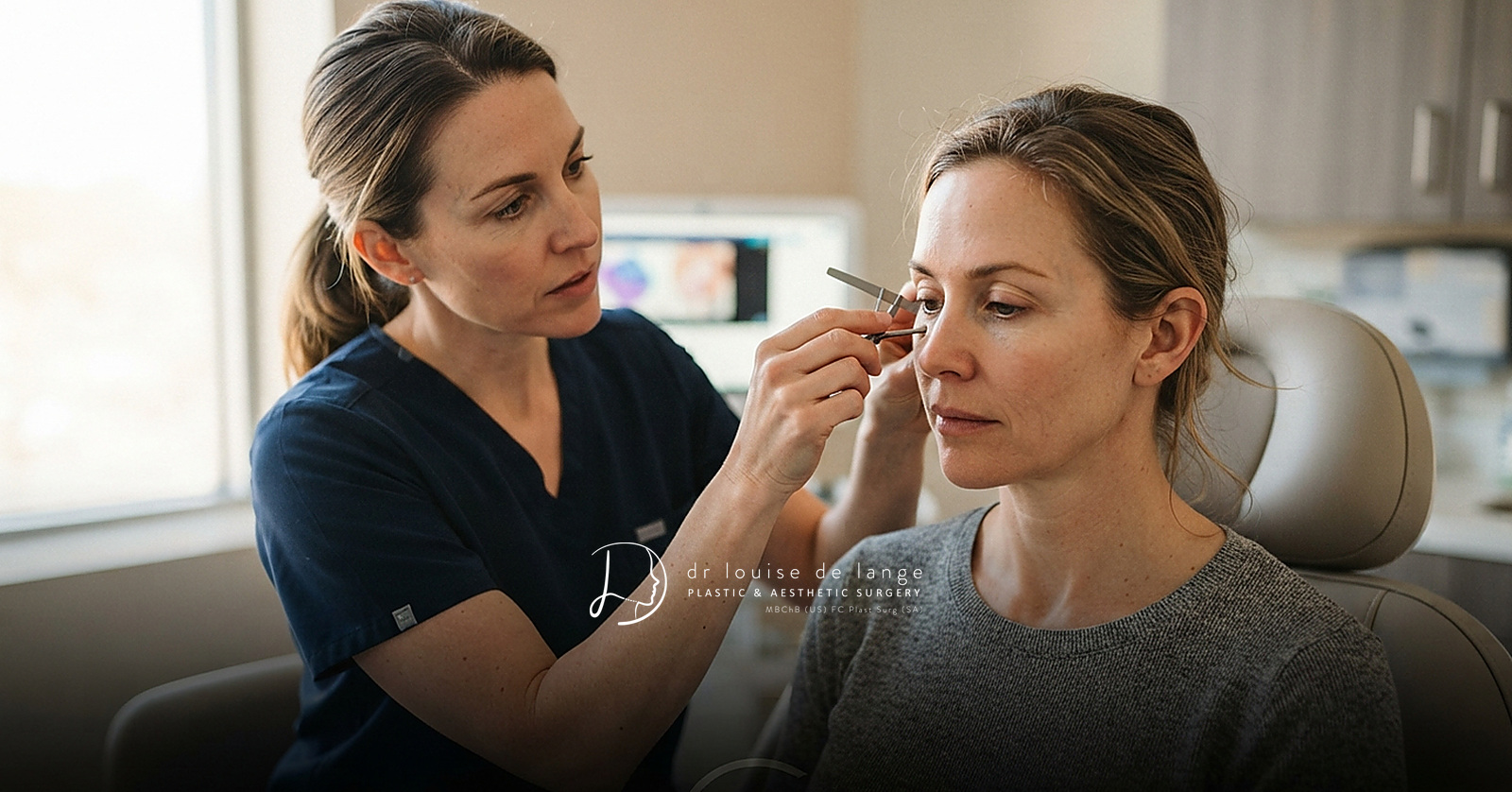
Medical Evaluation and Consultation
During consultation, the surgeon typically evaluates:
- Eyelid anatomy
- Skin quality
- Muscle function
- Fat distribution
- Vision concerns
- Medical history
- Previous eye surgeries
Photographic analysis and digital imaging may also be used to support treatment planning.
Recovery After Upper and Lower Blepharoplasty
Recovery is an important component of achieving optimal results. Although healing varies among individuals, most patients experience a predictable recovery process.
Understanding what to expect can help reduce anxiety and support successful outcomes.
The First Few Days
During the initial recovery period, patients may experience:
- Swelling
- Bruising
- Mild discomfort
- Temporary dryness
- Sensitivity to light
Cold compresses and prescribed medications are often recommended to improve comfort.
Returning to Daily Activities
Many patients return to desk-based work within one to two weeks, depending on the extent of surgery and individual healing patterns.
Physical activities should generally be resumed gradually under the guidance of the treating surgeon.
Long-Term Healing
Most visible swelling subsides within several weeks, but subtle refinement may continue for several months.
As tissues settle, the final results become increasingly apparent, revealing smoother contours and a rejuvenated eye area.
Potential Risks and Considerations
Like any surgical procedure, blepharoplasty carries certain risks. Choosing an experienced and qualified surgeon is one of the most important factors in minimizing complications.
Potential risks may include:
- Infection
- Bleeding
- Temporary dry eyes
- Asymmetry
- Scarring
- Delayed healing
- Changes in eyelid position
Fortunately, serious complications are uncommon when the procedure is performed by an appropriately trained specialist.
Combining Blepharoplasty With Other Facial Rejuvenation Procedures
Many patients choose to combine blepharoplasty with complementary treatments to achieve more comprehensive facial rejuvenation.
Common combinations include:
- Facelift
- Dermal fillers
- Botulinum toxin treatments
Combining procedures may improve overall facial harmony while reducing the need for multiple recovery periods.
Contact us today
Upper and lower blepharoplasty are among the most effective procedures for rejuvenating the eye area and addressing signs of aging that cannot be corrected through skincare alone. Whether the goal is to improve drooping upper eyelids, eliminate under-eye bags, enhance visual function, or achieve a more rested appearance, blepharoplasty offers highly customizable solutions tailored to individual needs.
Advances in facial plastic surgery, oculoplastic surgery, and modern eyelid techniques have made these procedures increasingly precise and natural-looking. By carefully evaluating facial anatomy and selecting the most appropriate surgical approach, experienced surgeons can achieve results that enhance appearance while preserving the unique characteristics of each patient.
For individuals considering eyelid surgery, a comprehensive consultation with a qualified specialist remains the most important step toward understanding the available options and determining the most suitable treatment plan.
Schedule a consultation with Dr. de Lange and her team of experts.