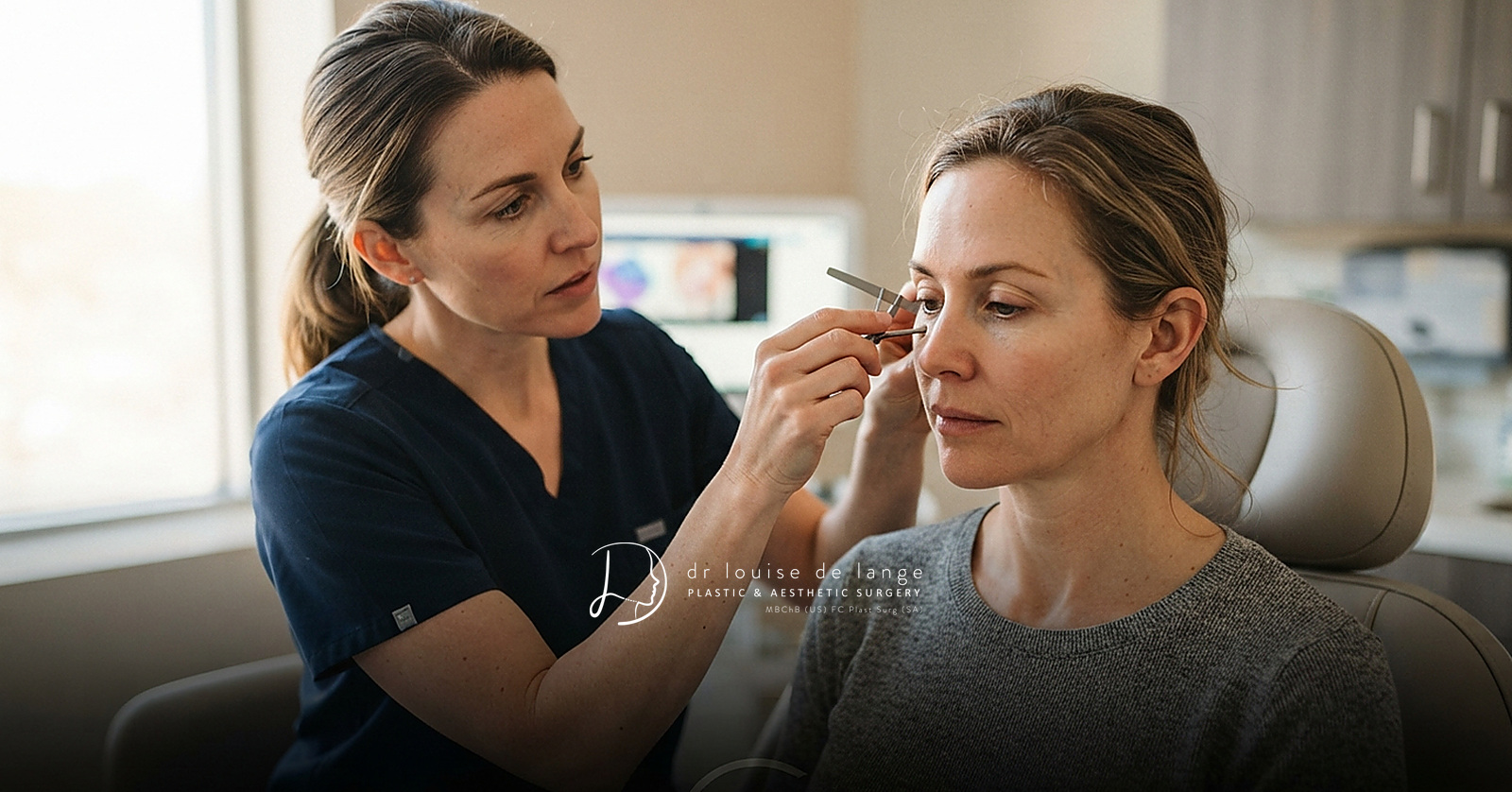
In the modern aesthetic-dermatology practice of Dr. de Lange, the term biostimulators is increasingly heard alongside more familiar treatments such as dermal fillers, neuromodulators, lasers and energy devices.
But what exactly are biostimulators, how do they differ from other treatment modalities, and when – and why – should you choose them?
In this article we will explore the mechanism of action, the clinical indications, the key product types (such as poly-L-lactic acid, calcium hydroxylapatite, polycaprolactone), compare them with traditional dermal fillers, review safety and after-care, and offer guidance for selecting the right treatment plan.
With 20 years of experience in aesthetic medicine and dermatologic innovations, let us dig into what gives biostimulators their distinctive position.
Understanding Biostimulators – Mechanisms & Principles
Before comparing biostimulators with other treatments, one must understand how they work, on what structural layers of the skin, and what cellular processes they engage.
What Are Biostimulators?
Biostimulators are injectable (and in some cases non-injectable) substances designed not primarily to fill or volumize but to stimulate the skin’s own regenerative mechanisms — most notably, activation of fibroblasts to produce new collagen and elastin within the dermal matrix.
Unlike classic dermal fillers, whose main effect is to replace lost volume (for instance hyaluronic acid fillers), biostimulators aim to remodel the tissue from within and improve skin quality, thickness, elasticity, and texture.
Why This Matters in Skin Aging
As individuals age, the skin experiences collagen loss, elastin fibre degradation, reduced hyaluronic acid content, and resultant skin laxity, volume loss, texture changes and wrinkle formation. Biostimulators address the underlying structural decline rather than just masking it.
In particular, during peri-menopausal years where collagen decline accelerates (around 30 % reduction over 5 years has been cited) some authors recommend early use of biostimulatory treatments.
Thus, the mechanism of biostimulators aligns not only with correction but also with prevention and maintenance of skin infrastructure.
How Biostimulators Differ from Conventional Dermal Fillers & Other Treatments
Having clarified the mechanism of biostimulators, the practical differentiation becomes critical: what sets them apart from dermal fillers, neuromodulators, laser/energy devices, or combined approaches?
Purpose & Treatment Intention
Conventional dermal fillers (for example hyaluronic acid, HA) are primarily used for volume restoration, contour enhancement, filling deep wrinkles or restoring lost fatty pads or bone support. In contrast, biostimulators aim for tissue remodelling, improving skin quality and infrastructure rather than simply filling. For instance, one aesthetic clinic states: “Dermal fillers provide volume, biostimulators are designed to stimulate collagen with minimal changes to volume.”
Depth of Action & Layer of Skin
Most dermal fillers are placed in fat pads, sub-cutaneous tissue or along bony support structures to lift or fill. Biostimulators are more often placed into the deep dermis or superficial sub-cutis, targeting skin architecture rather than only volume layers.
Onset of Results & Timeline
With fillers, results are often immediate, albeit with some settling time. By contrast, biostimulators produce a gradual effect over weeks to months as collagen is stimulated and accumulates. For example: improvements continue even after treatment series, with results developing over 2-6 months. Consequently, the patient should have realistic expectations: the effect is less instantaneous but often more natural and longer-lasting.
Durability and Maintenance
Durability varies by product. As per the literature, agents like CaHA or PLLA may provide results lasting 12-24 months or more, with some studies showing favourable safety and sustained effect. Some newer polymers such as PCL are showing even longer durability in early studies. Fillers generally require more frequent touch-ups depending on material and indication.
Combination and Complementarity
In practice, biostimulators are not exclusive—they can be used in combination with fillers, neuromodulators, lasers or energy-based devices to create a synergistic “rejuvenation strategy.” For instance, a patient might receive a filler for immediate contour enhancement followed by a biostimulator to improve skin infrastructure over time. Indeed, many clinics emphasise that biostimulators work synergistically with other treatments for comprehensive rejuvenation.
Clinical Indications, Candidate Selection
Selecting the right patient for biostimulators and planning the treatment effectively is as important as selecting the correct product. In this section we will review indications, contraindications, treatment areas, session planning, and combination strategies in the context of Dr. de Lange’s practice.
Indications & Ideal Candidates
Ideal candidates for biostimulators are healthy adults experiencing signs of skin aging: loss of volume, beginning skin laxity, textural changes, visible reduction in skin thickness, or patients who wish to prevent further decline rather than only correct existing defects.
According to one source, patients in their 30s may benefit from early intervention when collagen loss begins to accelerate.
For deeper sagging or major volume loss, a filler or surgical intervention might still be indicated; biostimulators are part of a holistic plan rather than a magic bullet.
Practical Considerations: After-Care, Results & Longevity
Understanding how to manage the post‐treatment phase, how results evolve, and what patient lifestyle factors influence longevity is essential. In this section we cover after-care advice, result timeline, maintenance protocols, and patient lifestyle factors.
After-Care Recommendations
Following injection of biostimulators, patients should be instructed to avoid strenuous exercise, excessive facial movements, sun exposure, and alcohol or blood-thinning medications for a few days post-treatment, to minimise swelling or bruising.
For certain products, gentle massage of the treated area may be recommended (eg. 5 minutes, 5 times per day for 5 days) to help distribute the product and minimise “lump” formation. Moreover, maintaining good skin care (sunscreen, antioxidants, hydration) supports the new collagen and increases trustworthiness of long‐term results.
Timeline and What Results to Expect
Results from biostimulators develop gradually—improvements in skin quality, firmness and thickness may continue for 2-6 months post-treatment.
Patients often appreciate natural evolution (rather than immediate dramatic change) but it is important they understand the slower onset. Durability ranges by product; some studies show sustained results for 12-24 months or more with proper technique and maintenance.
Maintenance & Lifestyle Factors
To maintain the effect of biostimulators, regular follow-up treatments (every 12-24 months depending on product) may be needed. Lifestyle factors that influence collagen health include smoking cessation, sun protection, healthy diet rich in vitamin C and protein (for collagen synthesis), regular sleep, and avoidance of extreme weight fluctuations. Patient behaviour affects outcomes as much as product choice.
When and Why to Choose Biostimulators — Clinical Decision Path
In aesthetic practice, the question is rarely “biostimulators or not?” but rather “when and why to include biostimulators in the overall plan?”.
Here we outline decision-making considerations: patient goals, timing, combination strategy, budget/expectation alignment.
Matching Patient Goals & Expectations
If the patient’s primary goal is immediate volume restoration (eg. large hollow under-eyes, severe fat pad atrophy), then a dermal filler may still be the primary treatment. However, if the goal is to improve skin quality, prevent further aging, enhance skin thickness and produce natural-looking, long-term results then biostimulators should be strongly considered. It’s also important that patients understand the timeline: slower onset but longer-lasting, more subtle enhancement. That clarity fosters trust (T) and realistic satisfaction.
Timing & Sequence
In the practice of Dr. de Lange, an optimal sequence might be: first address urgent structural deficits with fillers (or surgery if indicated), then apply biostimulators to maintain and enhance the results, then follow with maintenance treatments.
For younger patients (early 30s) interested in prevention, starting biostimulators early may reduce the need for frequent filler touch-ups later. Indeed, the “prevention” analogy has been used: biostimulators = dental cleaning, fillers = drilling/extraction.
Budget, Maintenance & Long-Term Plan
Biostimulators may have a higher upfront cost (and require multiple sessions) but the maintenance interval may be longer. Patients should be counselled on the cost-vs-benefit and the long-term plan (eg. 2-4 sessions then once yearly).
Misalignment of budget or maintenance expectations can undermine trustworthiness. As a provider, Dr. de Lange must present clear information on longevity, potential need for touch-ups, and realistic outcomes.
Rely on Dr. de Lange
In the evolving landscape of aesthetic dermatology, biostimulators represent a significant advance: they transcend mere volumisation and tap into the skin’s intrinsic regenerative capacity.
If you are considering a facelift in the next few years, please do not use biostimulators, especially the ones containing hydroxyapatite, as it influences dissection planes during the procedure.
For Dr. de Lange’s patients, understanding what makes biostimulators different from other treatments is essential — whether the goal is early intervention, skin quality improvement, or long-term structural support.
With the right patient selection, product choice and treatment plan, biostimulators can form a cornerstone of a holistic rejuvenation.
Book a consultation today!