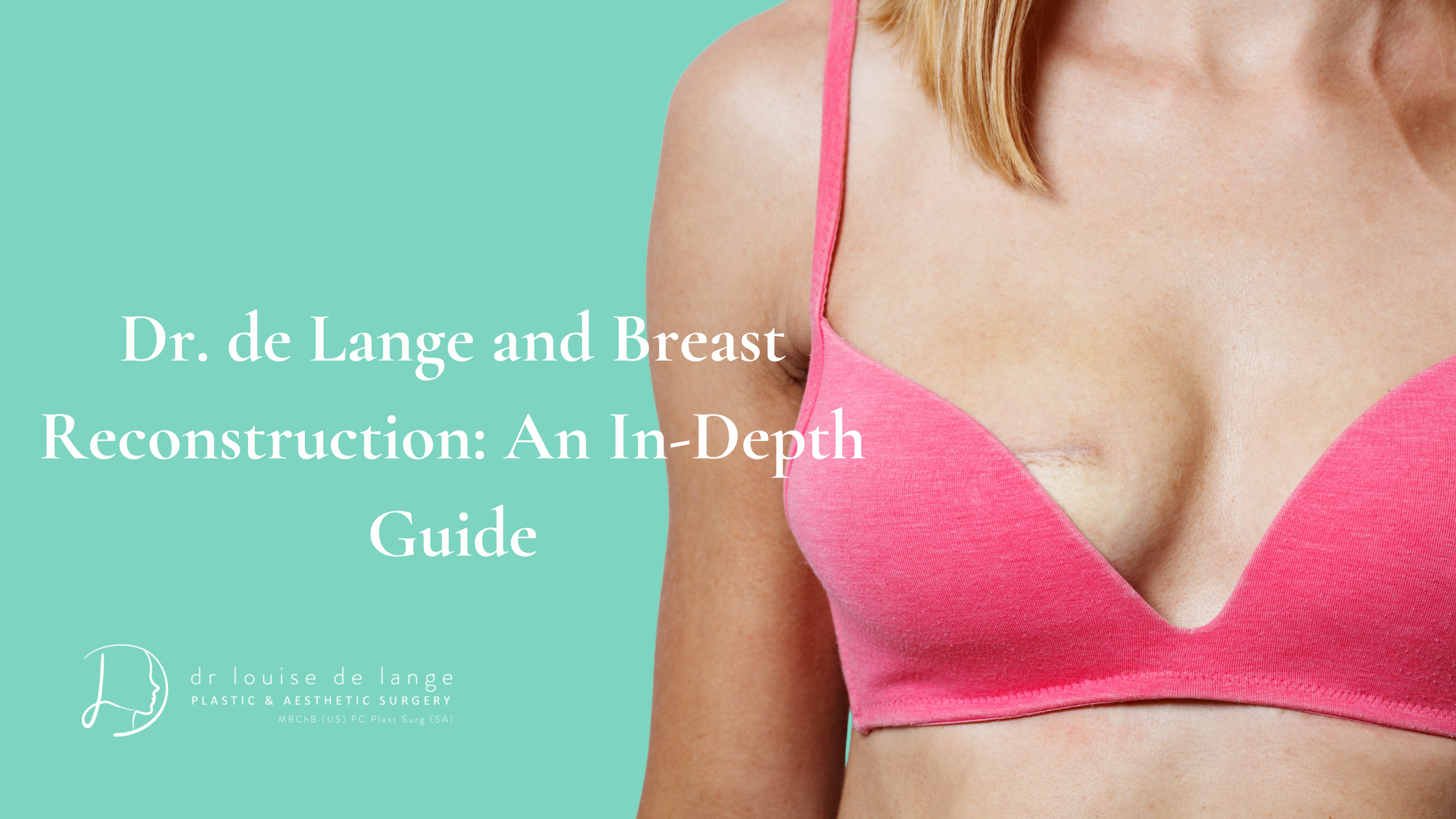
When a woman faces a mastectomy—whether due to breast cancer, risk reduction, or other medical indication—the decision about breast reconstruction is deeply personal and medically complex.
Undergoing reconstruction is not simply restoring a physical form, but reclaiming a sense of wholeness, confidence, and identity.
At the heart of that process is the plastic surgeon’s skill, judgment, and artistry. In this context, this article explores breast reconstruction by Dr. de Lange in Cape Town, South Africa in full depth: the techniques, trade-offs, patient criteria, surgical planning, recovery, and expected outcomes.
Along the way, we highlight essential concepts like implant-based reconstruction, autologous flap reconstruction, nipple preservation, risk management, and aesthetic symmetry.
Setting the Context: Why Choose Breast Reconstruction?
Before diving into techniques, it’s vital to frame the goals, timing, and decision factors involved in reconstruction.
The Goals of Reconstruction
The overarching aims are:
- Restore a breast mound that is as symmetric, natural, and durable as possible.
- Achieve aesthetic harmony with the opposite breast (in volume, shape, contour).
- Minimize scarring, complications, and donor-site morbidity.
- Recreate or approximate a nipple-areola complex (if desired).
- Maximize patient satisfaction, self-image, and quality of life.
These goals must balance practical constraints—patient anatomy, prior radiation, comorbidities, and risk factors.
Timing: Immediate vs Delayed Reconstruction
You can perform reconstruction immediately at the time of mastectomy or delayed (months or years later). Each has pros and cons:
- Immediate reconstruction can preserve more skin, avoid the experience of living without a breast, and reduce the total number of surgeries.
- Delayed reconstruction may be safer in complex oncologic cases, in patients requiring post-mastectomy radiation, or when the patient wishes to wait emotionally or physically.
Dr. de Lange’s consultations will consider your cancer treatment plan (chemo, radiation) and overall health when advising on timing.
Patient Selection: What Influences the Best Option?
Not every method suits every woman.
Several factors guide the choice:
- Body habitus / donor tissue availability (does the patient have sufficient abdominal fat, back tissue, thigh tissue, etc.).
- Previous surgeries, scarring, or vascular anatomy, especially if prior abdominal surgeries.
- Radiation exposure to the chest wall (which may impact implant success).
- Health status, smoking history, diabetes, vascular disease (which influence healing and risk of flap failure).
- Personal preference for implants or autologous tissue, risk tolerance, and willingness to undergo multiple procedures.
- Desire for natural feel, permanence, minimal maintenance.
In Dr. de Lange’s consultations, she would thoroughly review medical history, perform imaging and assessments, and map options before deciding.
The Main Techniques of Breast Reconstruction
Overview of Techniques
Broadly, breast reconstruction falls into two categories:
- Implant-based (alloplastic) reconstruction, using a silicone or saline implant.
- Autologous (flap) reconstruction, using the patient’s own tissue (skin, fat, sometimes muscle) transplanted to the chest.
Some surgeons also perform hybrid (implant + flap) reconstructions. Below, we dissect each and examine subtypes.
Implant-Based Reconstruction
Using implants is often simpler, less invasive (in terms of donor sites), and may shorten operating time or hospital stay. However, implants come with their own risks and limitations.
Two-Stage Expander to Implant Reconstruction
This is a common pathway:
- A tissue expander is inserted beneath the chest muscle or beneath a portion of skin after mastectomy.
- Over weeks to months, the expander is gradually inflated (via port) to stretch skin and build volume.
- In a second surgery, the expander is removed and replaced with a permanent implant (silicone or saline).
This staged method gives more control, especially when the mastectomy skin is tight or prior radiation exists.
Direct-to-Implant (One-Stage) Reconstruction
In some cases—especially with nipple-sparing mastectomy (NSM) and favorable skin flaps—a full implant can be placed at the same time as the mastectomy, avoiding the expansion phase. This is often done with support from an acellular dermal matrix (ADM) or surgical mesh to provide structural coverage and contour.
While cosmetically appealing for reducing number of surgeries, direct-to-implant comes with stricter requirements on skin perfusion and mastectomy technique.
Autologous (Flap) Reconstruction
Autologous reconstruction uses a patient’s own tissue—skin, fat, blood vessels, and perhaps muscle—from a donor site elsewhere on the body. It can deliver more durable, natural-feeling results.
Pedicled vs Free Flaps
- Pedicled flaps remain attached to their original blood supply and are tunneled or transferred to the chest (e.g. latissimus dorsi flap).
- Free flaps are completely detached and reconnected microsurgically to chest vessels (e.g. DIEP, TRAM, SGAP).
Free flaps demand greater microsurgical skill and operating time, but spare muscle and often yield better donor-site outcomes.
Common Flap Types
DIEP (Deep Inferior Epigastric Perforator) Flap
One of the most advanced and popular choices. It harvests skin and fat from the lower abdomen without sacrificing abdominal muscle, reconnecting perforator blood vessels microsurgically. This offers a “tummy-tuck” benefit at the same time.
TRAM (Transverse Rectus Abdominis Myocutaneous) Flap
Older technique that uses muscle plus skin/fat from the lower abdomen. Variants include muscle-sparing TRAM and free TRAM. While robust, TRAM flaps carry higher donor-site morbidity and risk of abdominal weakness.
Latissimus Dorsi (LD) Flap
This pedicled flap uses tissue and muscle from the back. It’s often combined with an implant to supplement volume, especially when abdominal tissue is insufficient.
SGAP / IGAP / PAP / TUG Flaps
These take tissue from the gluteal region (SGAP/IGAP) or the upper inner thigh (PAP, TUG). They are useful when abdominal donor sites are unavailable or undesirable.
Risks, Trade-Offs, and Recovery
- Longer operative time, often 6–8 hours or more.
- Longer hospital stay and more intensive monitoring of flap perfusion (the microsurgical vascular connections).
- Donor-site morbidity: scarring, abdominal bulge or hernia (especially in non muscle-sparing techniques).
- Fat necrosis: small areas of tissue death within the flap, which can create firmness or lumps.
- Sensory changes: loss of sensation is common; nerve reconnection (neurotization) is an evolving field.
- Need for revision: secondary refinements are common to optimize symmetry.
Despite these, many patients prefer autologous reconstruction because it tends to mimic the feel and behavior of natural breast tissue better over time and avoids some implant-related complications.
Hybrid and Adjunctive Techniques
When a pure implant or pure flap approach is inadequate, surgeons use hybrid reconstruction: combining an implant with an autologous flap to refine contour, augment volume, or reduce complications.
This might mean a smaller implant plus fat grafting, or partial flap plus implant support.
Other adjunctive techniques include fat grafting (lipofilling) to fine-tune contour irregularities, smooth edges, or add minor volume. The advent of perforator flap techniques and microsurgical refinements has made these adjuncts safer and more versatile.
Additionally, mesh or internal bra techniques (sometimes using titanium or polypropylene mesh) have been explored to provide internal scaffolding and structural support, though evidence is more limited.
Surgical Planning, Imaging, and Preoperative Workup
Every excellent reconstruction begins with meticulous planning.
Here’s how Dr. de Lange would approach it:
Clinical Evaluation and Documentation
- Comprehensive medical history, including prior surgeries, comorbidities, medications, smoking status, and oncologic plan.
- Physical examination of the chest wall, skin envelope, and potential donor sites (abdomen, back, thighs, gluteal).
- Photographic documentation and measurements in multiple views (frontal, lateral, oblique).
- Discussion of desired breast size, patient expectations, and trade-offs.
Imaging and Vascular Mapping
For flap cases (especially DIEP and other perforator flaps), preoperative imaging is crucial to map blood vessels (perforators). Techniques include CT angiography (CTA) or MR angiography. These help identify the best perforators, minimize dissection, and reduce operative time.
Some centers employ computer-assisted detection of perforators to assist radiologists and reduce subjectivity when delineating vascular anatomy.
Intraoperative Strategy and Mastectomy Coordination
Coordination with the breast surgeon is essential. Key considerations:
- Skin-sparing or nipple-sparing mastectomy techniques: preserving skin or nipple-areola complex (if oncologically appropriate) maximizes reconstructive outcomes.
- Incision planning: ensuring that access for reconstruction doesn’t overly compromise skin perfusion.
- Sequencing the mastectomy and flap or implant placement to minimize ischemia time.
- Preparing recipient vessels (thoracodorsal or internal mammary vessels) for microsurgical connection.
Patient Counseling and Consent
Transparent discussion of risks, benefits, alternatives, likely outcomes, and expectations is nonnegotiable for informed decision making. Surgeons with strong E-E-A-T will provide:
- Visual aids (before/after photos)
- Explanation of complication rates, success rates, and reoperation likelihood
- Recovery timeline, scar expectations, and sensation changes
- Plan for revisions or touch-ups
Dr. de Lange’s reputation, training, and patient care philosophy would ideally come through in how these consultations are structured, emphasizing trust and shared decision-making.
Why Consider Breast Reconstruction by Dr. de Lange
Credentials, Experience, and Practice Philosophy
- Dr. de Lange is a board-trained plastic surgeon based in Cape Town, South Africa, practicing breast, facial, and body procedures including reconstructive surgery.
- Her website emphasizes a personalized approach, natural aesthetics, and patient-centered care.
- Her blend of reconstructive and cosmetic expertise may afford her a holistic aesthetic sensibility: not only restoring volume but harmonizing form.
How the Doctor Might Integrate the Techniques
- In suitable patients, she may offer nipple-sparing mastectomy + immediate reconstruction (implant or flap) for maximum preservation.
- She may tailor hybrid reconstructions (implant + fat grafting) or fascia-sparing flap techniques to reduce morbidity.
Practical Considerations and Decision Guidance
Resource Considerations
Breast reconstruction is resource-intensive:
- Operating room time, microsurgical equipment, imaging, and postoperative monitoring contribute to cost.
- Revisions, implant replacements, and long-term follow-up may add to lifetime costs.
When selecting a provider like Dr. de Lange, transparency about fees, revision costs, and included services is crucial.
Emotional, Psychological, and Support Aspects
Reconstruction isn’t just surgery—it’s a process with emotional impact.
Many patients benefit from:
- Psychosocial counseling before and after surgery.
- Peer support groups or mentorship from other women who have undergone reconstruction.
- Clear communication from the surgical team about expectations and recovery.
Decision Trees: How to Select the Right Technique
While clinical judgment dominates, here’s a simplified decision framework:
- Is the chest skin envelope healthy and well vascularized? → Favors direct reconstruction (implant or flap)
- Is the patient scheduled for irradiation? → Favors robust autologous tissue
- Is there adequate donor tissue (abdomen, back, thigh)? → Determines candidate flap types
- Does the patient prefer fewer surgeries or minimal donor-site impact? → Could lean implant or hybrid
- Is the patient willing to accept the risk of implant revisions? → Informs implant vs flap
- Are aesthetic goals modest or ambitious? → May require staged revisions or fat grafting
Ultimately, the decision is shared: balancing risk, aesthetic desire, medical constraints, and personal preferences.
Book a consultation with the Doctor!
Breast reconstruction by Dr. de Lange is not just a matter of restoring form—it is a delicate interplay of surgical technique, aesthetic judgment, patient values, and risk management.
Through a detailed understanding of implant-based reconstruction, autologous flap techniques, hybrid methods, surgical planning, recovery, and outcome expectations, patients and referring practitioners can approach this decision more confidently.